

If you’ve spent any time on trout streams in the last decade, you’ve probably seen someone Euro nymphing, maybe without even knowing it. The angler wading in close, rod held high, no indicator, watching a thin piece of colored monofilament with laser focus. That’s Euro nymphing, and once you understand what it’s actually doing, you’ll realize why so many fly fishers are making it their go-to method.
I’ve been fly fishing for over 20 years, and Euro nymphing genuinely changed how I think about reading water and presenting a fly. It’s not just a technique, it’s a whole different way of connecting with the fish. Here’s everything you need to know to get started.
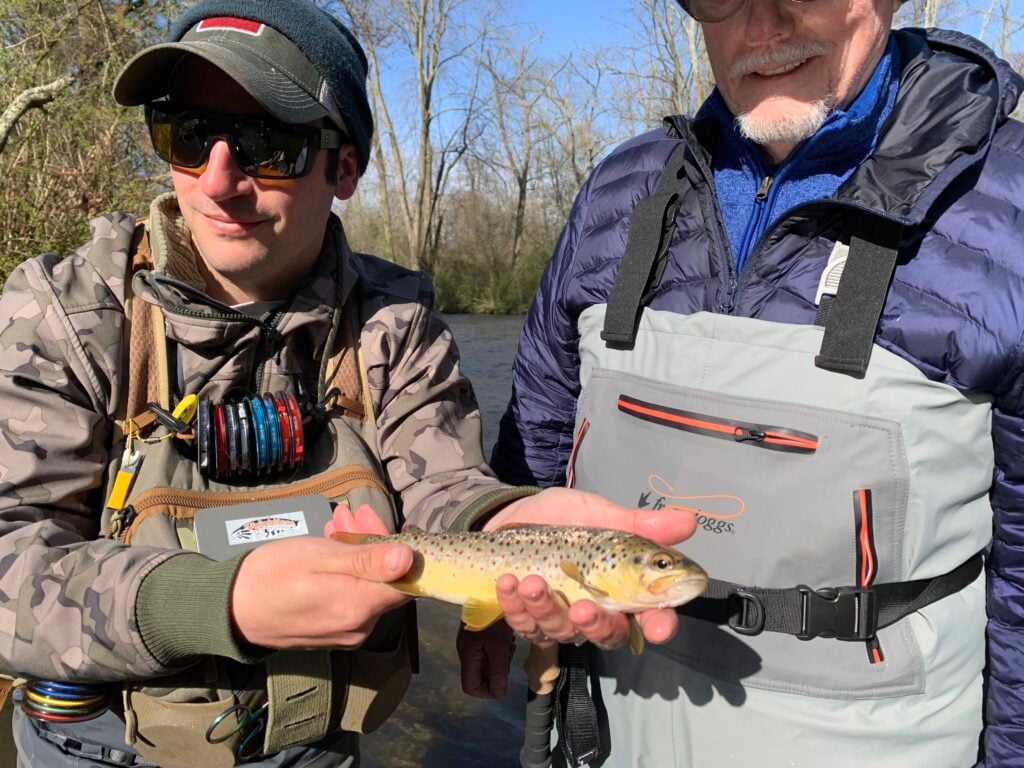
What Is Euro Nymphing?
Euro nymphing, sometimes called European nymphing or tight-line nymphing, is a contact nymphing technique developed from competitive fly fishing in Europe, particularly in Czech Republic, Poland, France, and Spain. Each country put its own spin on it, but the core idea is the same: get your flies to the bottom fast, maintain direct contact with them throughout the drift, and detect strikes through feel and visual cues rather than watching a bobber. The big difference from traditional nymphing is that there’s no strike indicator. Instead, you use a long, sensitive rod, a specialized leader setup, and a colored section of monofilament called a sighter to detect when a fish takes the fly. The connection between you and your fly is nearly direct, which is why you can feel taps and subtle takes that an indicator would completely mask.
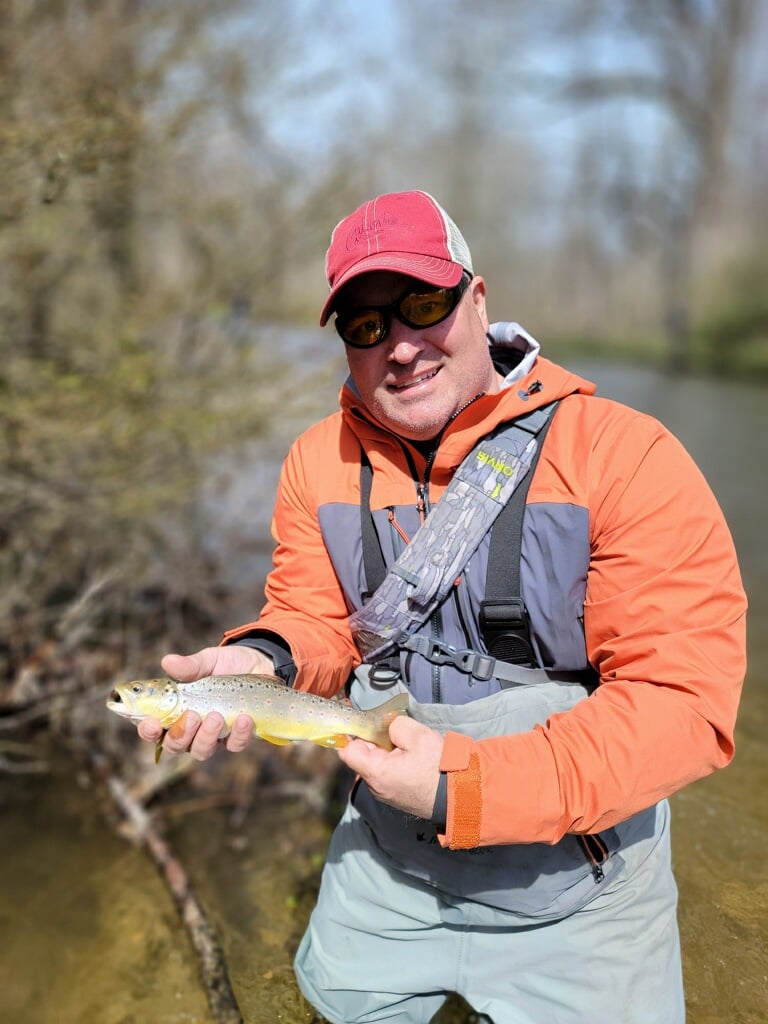
Why Euro Nymphing Is So Effective
Trout spend the vast majority of their feeding time, somewhere around 80-90% by most estimates, eating subsurface. And most of that feeding happens right near the bottom where aquatic insects live. Traditional nymphing with an indicator works, but the indicator creates drag, slows down your strike detection, and limits how precisely you can control your drift in broken currents. Euro nymphing solves all three of those problems. By keeping virtually all the line off the water and relying on the weight of the flies themselves to sink, you eliminate most surface drag entirely. Your sighter reacts to even the lightest touch. And because you’re tight to the flies, you can feel the difference between your fly ticking a rock and a fish actually eating it. The technique absolutely shines in faster pocket water and runs, the kind of water that’s hard to fish effectively with an indicator because the varying current speeds constantly pull your rig. In that water, Euro nymphing is on a different level.
The Gear You Need
You don’t need to spend a fortune to get started, but the right gear does make a significant difference.
Rod: Euro nymphing rods are typically long, between 10 and 11 feet, and built for high-stick fishing with direct line contact. They’re soft-tipped for detecting subtle takes but have enough backbone to set the hook quickly. Dedicated Euro rods are ideal, but a 10-foot 3wt or 4wt can get you started without breaking the bank.
Reel: Honestly, any reel that holds your line works. You’re barely going to use it. What matters is keeping the system lightweight so your arm doesn’t tire out.
Line: Many Euro nymphers skip the fly line entirely and run straight monofilament or level fluorocarbon. Others use a thin running line. The goal is getting as little material as possible on or above the water. Euro-specific fly lines exist and work great if you want a fly-line-based system.
Leader and Sighter: This is where Euro nymphing setups get a little technical. You’ll build or buy a leader that includes a section of colored bicolor monofilament, your sighter, which is the visual strike indicator. Below the sighter, you run a tippet section to your flies. Common setups run anywhere from 12 to 20 feet of total leader.
Flies: Euro nymphing flies are typically small, heavy, and slim. Jig hooks with tungsten beads are the standard because the hook rides point-up, reducing snags. Classic patterns include jigged hare’s ears, perdigons, Walt’s worms, and various soft hackles. Perdigons in particular are a staple, their hard resin coating lets them cut through fast current and sink like a stone.
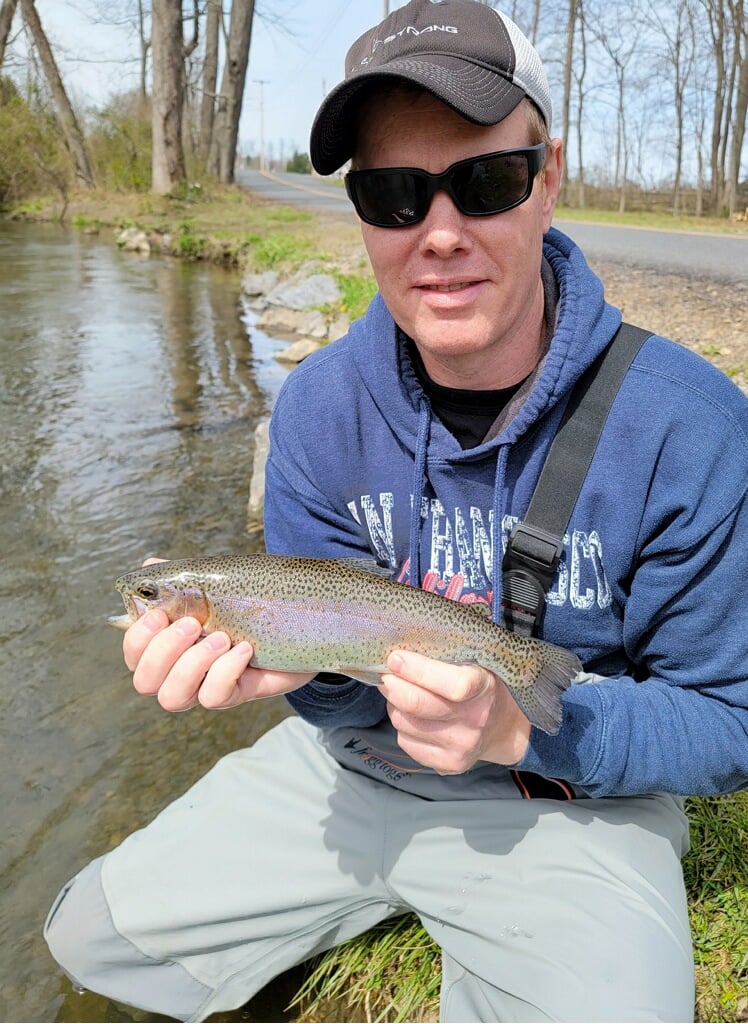
Setting Up Your Euro Nymphing Rig
The Euro nymphing rig looks intimidating the first time you see one laid out, but once you understand what each part is doing, it all makes sense. The whole system is designed around one goal: getting your flies to the bottom quickly, keeping them there through the drift, and giving you the clearest possible signal when a fish eats.
The rig breaks down into three main parts: the butt section, the sighter, and the tippet. Here’s how they work together.
The butt section connects to your fly line or running line and provides a little stiffness to help turn the leader over on the cast. Most anglers build this from 3 to 4 feet of heavier monofilament, typically around 20 to 25 pound test. This section rarely touches the water.
Below the butt section sits the sighter, which is the heart of the whole system. The sighter is a short section of brightly colored, often bicolor monofilament that you watch throughout the drift instead of a traditional indicator. Any hesitation, twitch, or upstream movement of the sighter means you set the hook. Most sighters run 2 to 5 fet long and are either purchased pre-made or built by alternating two colors of tippet material using blood knots.
Below the sighter you run your tippet, typically fluorocarbon in 4x, 5x, or 6x depending on water clarity and fly size. Total tippet length from the sighter to your lead fly usually runs between 3 and 5 feet. Most anglers fish a two-fly rig, with a dropper tag tied off a triple surgeon’s knot or directly off the bend of the first hook. The lead fly is heavier and rides lower, the dropper is lighter and fishes higher in the water column.
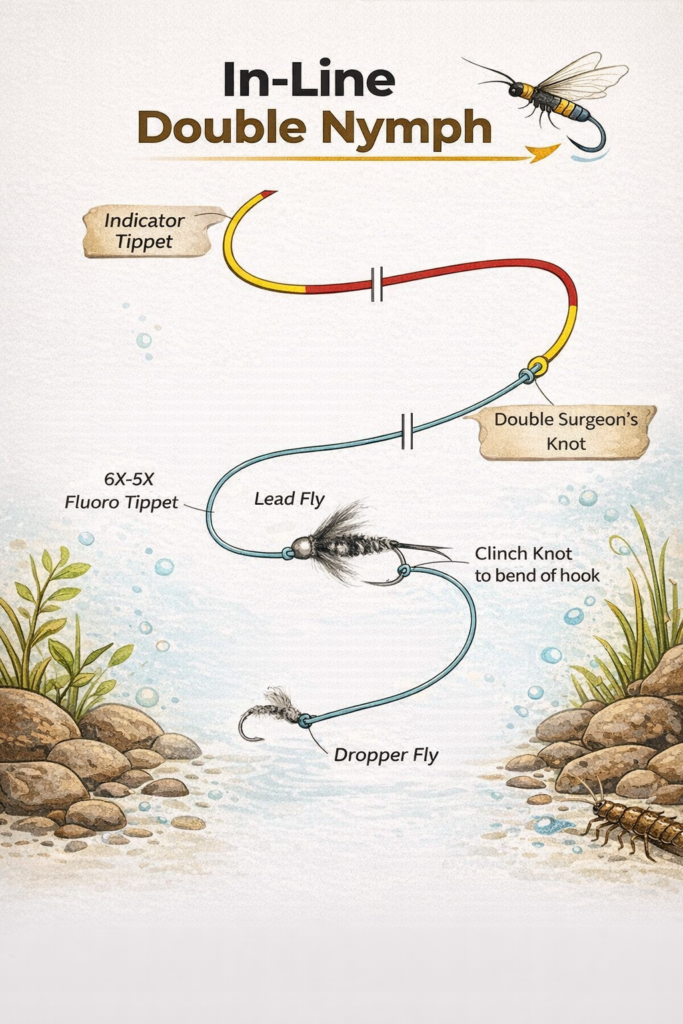
Detailed Leader Formula
Here’s a proven starting setup that works well in most trout water:
- Butt section: 3 feet of 20 lb monofilament (connects to fly line or level mono running line)
- Transition: 2 feet of 12 lb monofilament
- Sighter: 2 to 5 feet of bicolor indicator mono (Hends Camou French Nymph or similar)
- Tippet ring: size 2mm, connects sighter to tippet
- Tippet: 3-5 feet of 5x fluorocarbon to your lead fly
- Dropper: 4 to 6 inches of 6x fluorocarbon off a surgeon’s knot tag, positioned 18 to 24 inches above the lead fly
Total leader length from fly line to lead fly: roughly 14 to 16 feet. This keeps your sighter at or just above the water surface in typical run depth, giving you the best visual on subtle strikes.
For deeper or faster water, add a foot or two to the tippet section and go heavier on your lead fly rather than adding weight to the leader itself. For slower, clearer water, drop down to 6x throughout and shorten the dropper to reduce any unnatural movement.
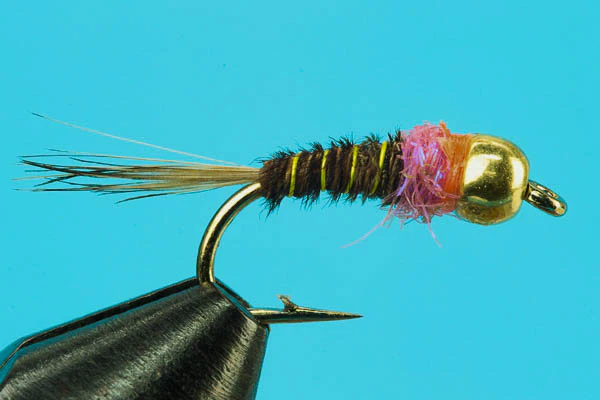
One of my favorite flies to use for this technique is the Frenchie.
The Technique: How to Actually Do It
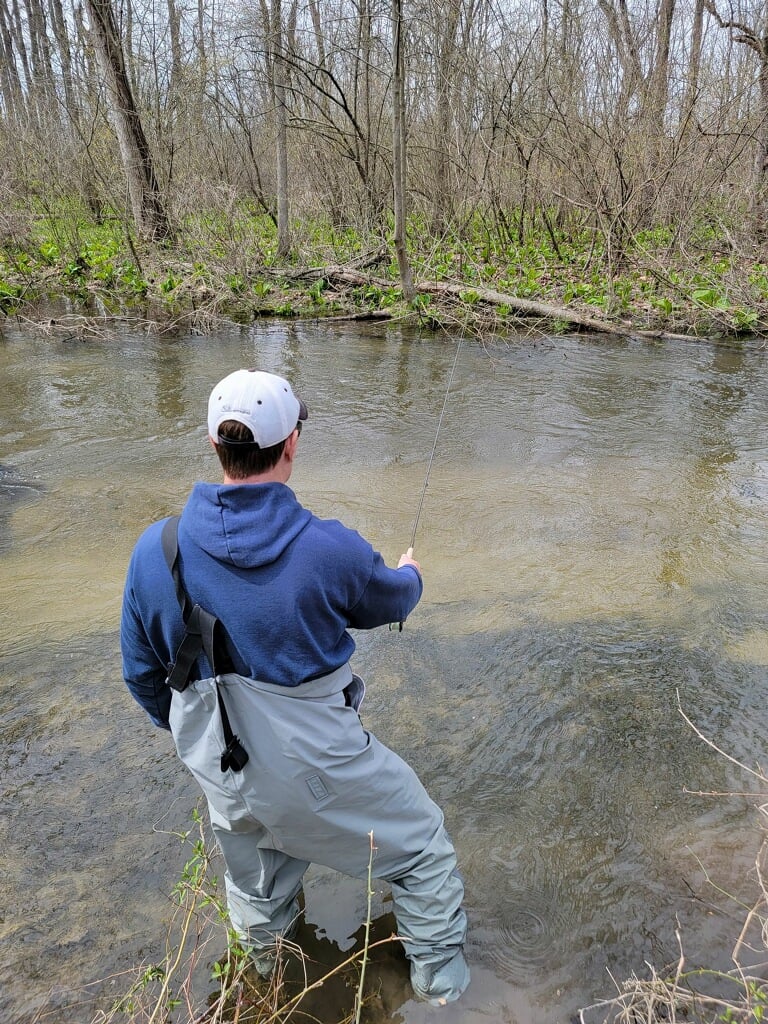
The mechanics of Euro nymphing are simpler than they look, but developing a feel for it takes some time on the water.The cast itself is more of a lob than a traditional fly cast. You’re not shooting 40 feet of line. You’re making short, accurate presentations, typically 15 to 25 feet away, often directly upstream or at a slight angle. The goal is to land your flies at the head of the seam you want to fish. Once your flies hit the water, immediately lift your rod to keep as much of the leader off the surface as possible. You want only the tippet section below the sighter touching the water. As your flies sink and begin drifting, follow them downstream with your rod tip while keeping that tight connection. The sighter should be slightly downstream of your rod tip, hanging at a gentle angle.
Watch the sighter constantly. A pause, a dart upstream, a twitch sideways, any of those can be a take. Set the hook by lifting the rod firmly and quickly. Euro nymphing sets are generally a short, decisive lift rather than a long sweep. The lead fly, the heavier one closer to your tippet knot, does most of the work getting the rig to depth. The dropper fly above it rides higher in the water column, covering a second zone. This two-fly rig is standard and effectively lets you fish two depths simultaneously.
Reading Water for Euro Nymphing
Euro nymphing rewards anglers who understand water. The technique is most effective in runs and riffles between 1 and 4 feet deep, where the current is fast enough to keep trout actively feeding but not so violent that it blows your rig around. Look for seam lines where fast water meets slower water. Trout hold in the slower lane but dart into the faster current to grab food. Broken pocket water behind boulders is gold. So are the heads of pools where current accelerates before it slows down and deepens. The technique is less effective in very slow, flat water where fish can see you easily and the subtle presentation of dry flies or streamers often works better. But in active, moving water, Euro nymphing is about as deadly as it gets.
Tips to Improve
- Get closer than you think you need to. Most beginners fish too far away. Move into range. Fifteen feet is a perfectly good distance.
- Fish heavy flies first. When you’re learning, err on the side of more weight. You can always go lighter once you’ve got the mechanics down.
- Set on everything. Early on, set the hook anytime the sighter does anything unexpected. You’ll hook the bottom a lot, but you’ll also stop missing fish.
- Watch the sighter, not the water. It’s tempting to look around while you’re drifting, but keep your eyes locked on that sighter. Strikes are fast.
Getting Started
Euro nymphing has a bit of a learning curve, but it’s not nearly as complicated as it sometimes gets made out to be. Grab a long rod, build or buy a simple leader with a sighter, tie on a couple of tungsten jig nymphs, and find some moving water. You’ll be surprised how quickly it starts to click.
The first time you feel a trout mouth your fly before you even see the sighter move, you’ll understand why so many fly fishers have gone deep on this technique. There’s nothing quite like it.


Add comment