

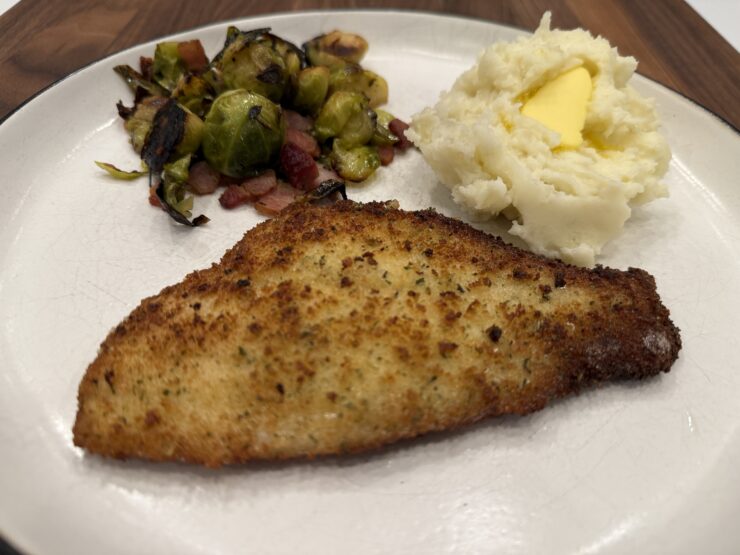
If you want fish that shatters when you bite into it and stays tender on the inside, this pan-fried flounder is exactly what you need. The secret is a proper three-step breading method with flour, egg wash, and Italian seasoned bread crumbs that creates a golden crust without overpowering the delicate fish.
Flounder is one of those fish that deserves simple treatment. It has a naturally sweet, mild flavor that falls apart into beautiful flakes when cooked right. The breading here adds texture and a hint of seasoning without masking what makes flounder so good in the first place.
Serve this with lemon wedges and tartar sauce, and you have a meal that rivals anything from a seafood shack. The whole thing comes together in about 20 minutes, making it perfect for a weeknight dinner when you want something that feels special without the hassle.
Why This Recipe Works
The three-step breading method creates layers that stick to the fish and fry up crispy every single time. Starting with flour gives the egg wash something to grip onto. The egg wash then acts like glue for the bread crumbs. Skip any of these steps and your coating slides right off in the pan.
Italian seasoned bread crumbs bring flavor without requiring you to measure out a bunch of spices. You can use regular panko mixed with Italian seasoning if that’s what you have on hand. Either way, you get herbs and seasoning built right into the crust.
Shallow frying in about an inch of oil gives you restaurant-quality results without the mess of deep frying. The fish floats just enough to cook evenly, and you get that satisfying golden color on both sides.
Ingredients
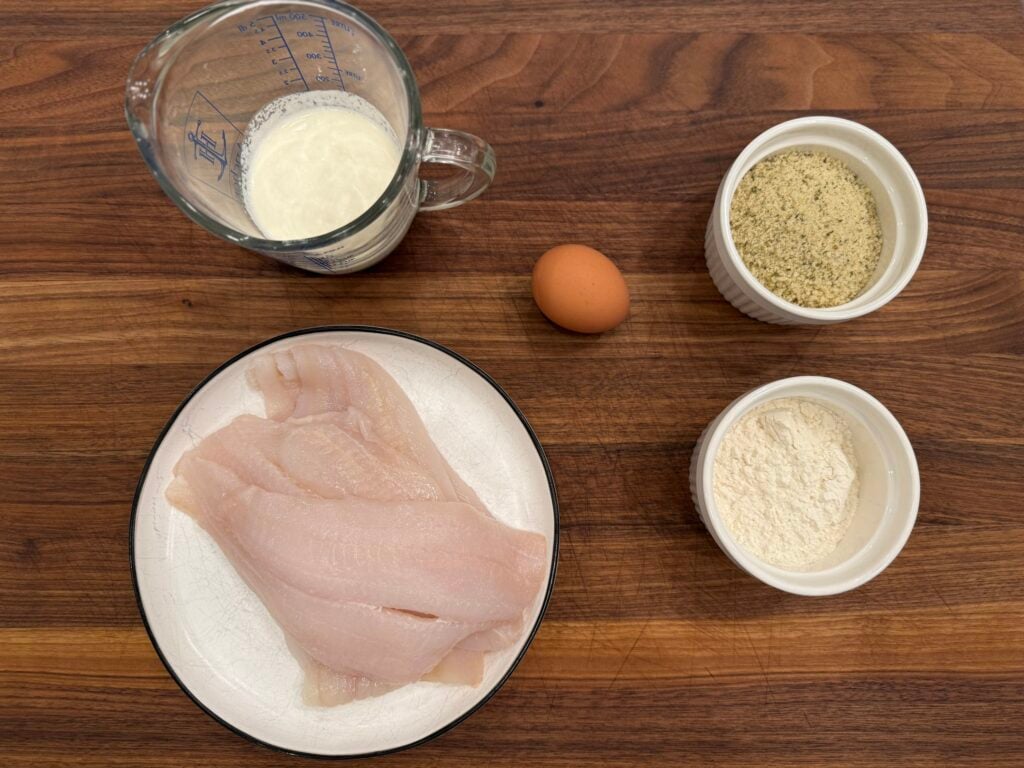
- For the flounder: 1 to 1.5 pounds flounder fillets (about 4 fillets)
- 1/2 cup all-purpose flour
- 2 large eggs
- 2 tablespoons water or milk
- 1.5 cups Italian seasoned bread crumbs (or panko mixed with 1 teaspoon Italian seasoning)
- 1/2 teaspoon salt
- 1/4 teaspoon black pepper
- Avocado oil for frying
For serving: lemon wedges, tartar sauce, fresh parsley (optional)
Setting Up Your Breading Station
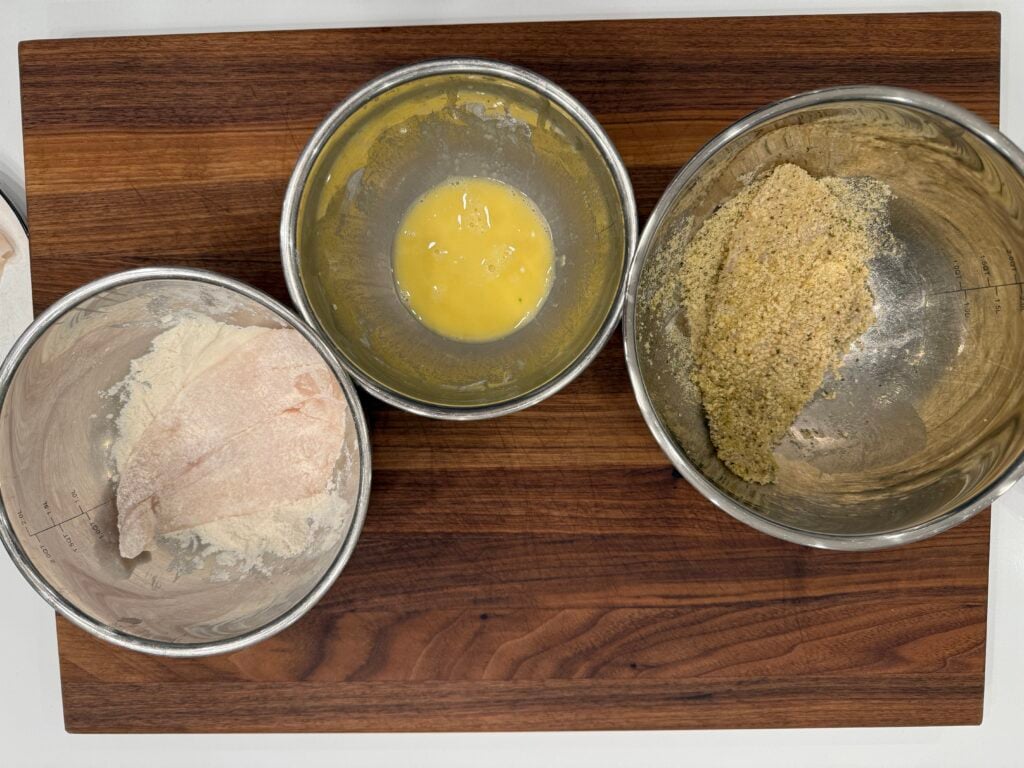
Organization matters here. Get three shallow dishes or plates lined up before you start. The first dish holds the flour seasoned with salt and pepper. The second dish has your eggs beaten with water or milk until smooth. The third dish contains your Italian seasoned bread crumbs or panko mixture.
Pat your flounder fillets completely dry with paper towels. Moisture is the enemy of a crispy crust. Any water left on the fish creates steam that separates the breading from the fillet.
How to Bread the Flounder
Take each fillet and press it into the seasoned flour, coating both sides completely. Shake off any excess flour. The coating should be thin and even.
Dip the floured fillet into the egg wash, letting the excess drip off for a few seconds. You want full coverage but not thick globs of egg that will turn gummy when fried.
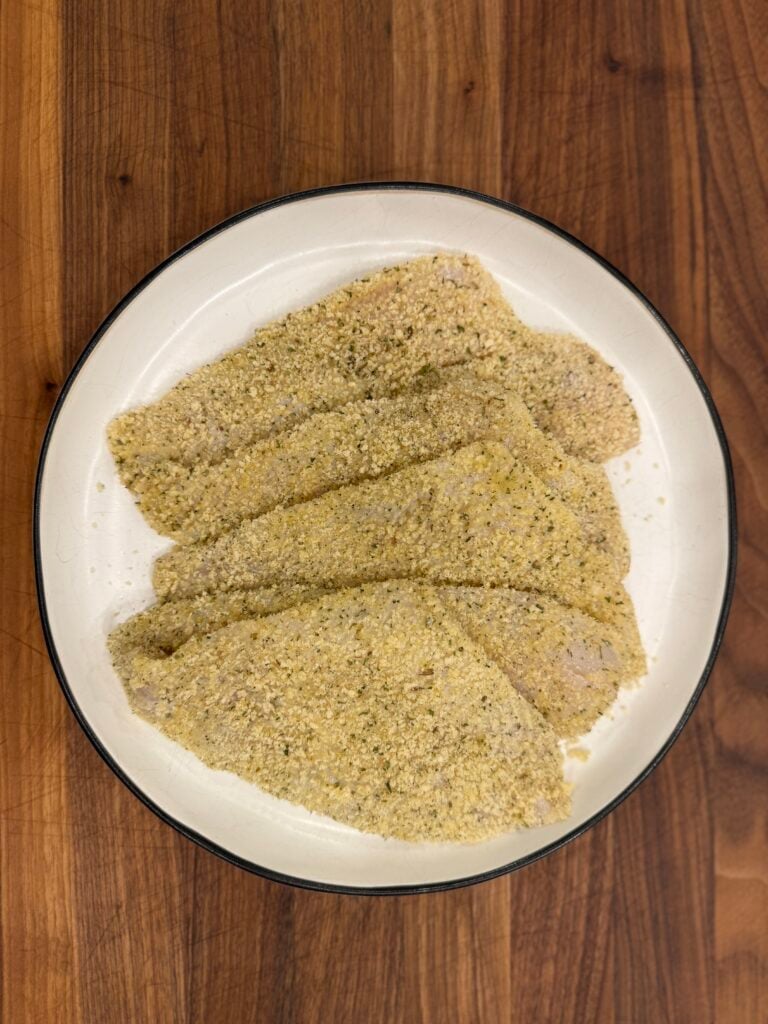
Press the fillet into the bread crumbs, making sure to coat every surface. Gently press the crumbs into the fish so they stick. Set the breaded fillets on a plate or wire rack while you finish the rest.
Frying the Flounder
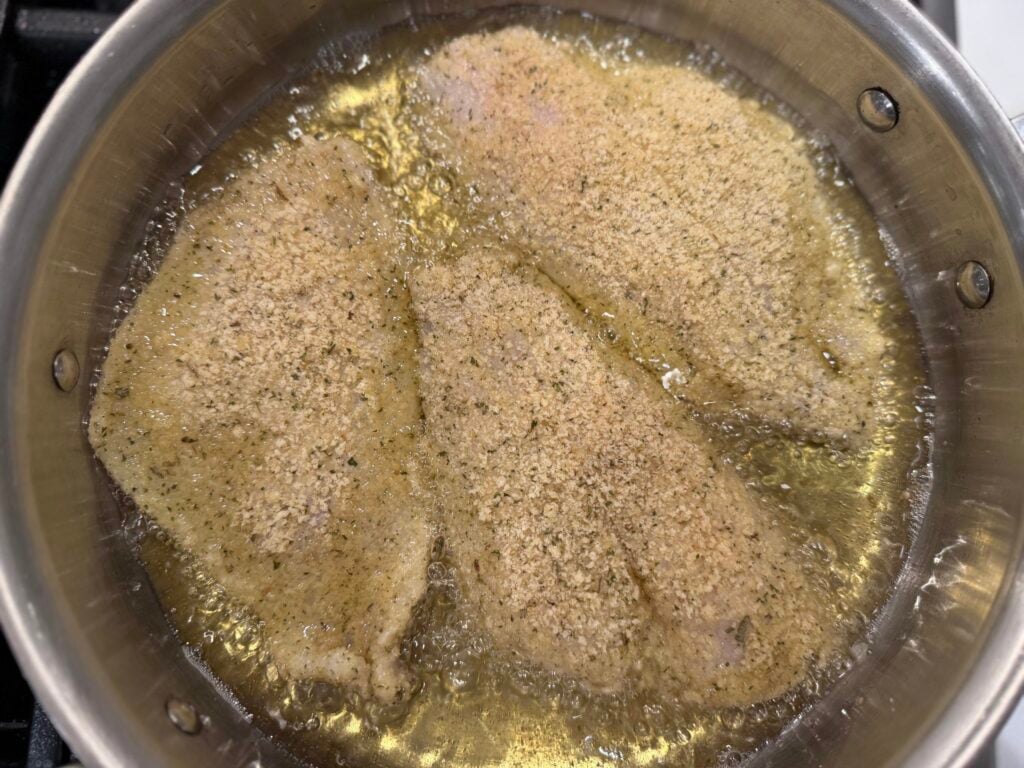
Pour about an inch of avocado oil into a large skillet or deep frying pan. Heat the oil over medium-high heat until it reaches 350 to 375 degrees. If you don’t have a thermometer, drop a small pinch of bread crumbs into the oil. It should sizzle immediately and float to the top.
Gently lower the breaded fillets into the hot oil. Don’t overcrowd the pan since that drops the oil temperature and leads to soggy, greasy fish. Fry in batches if needed.
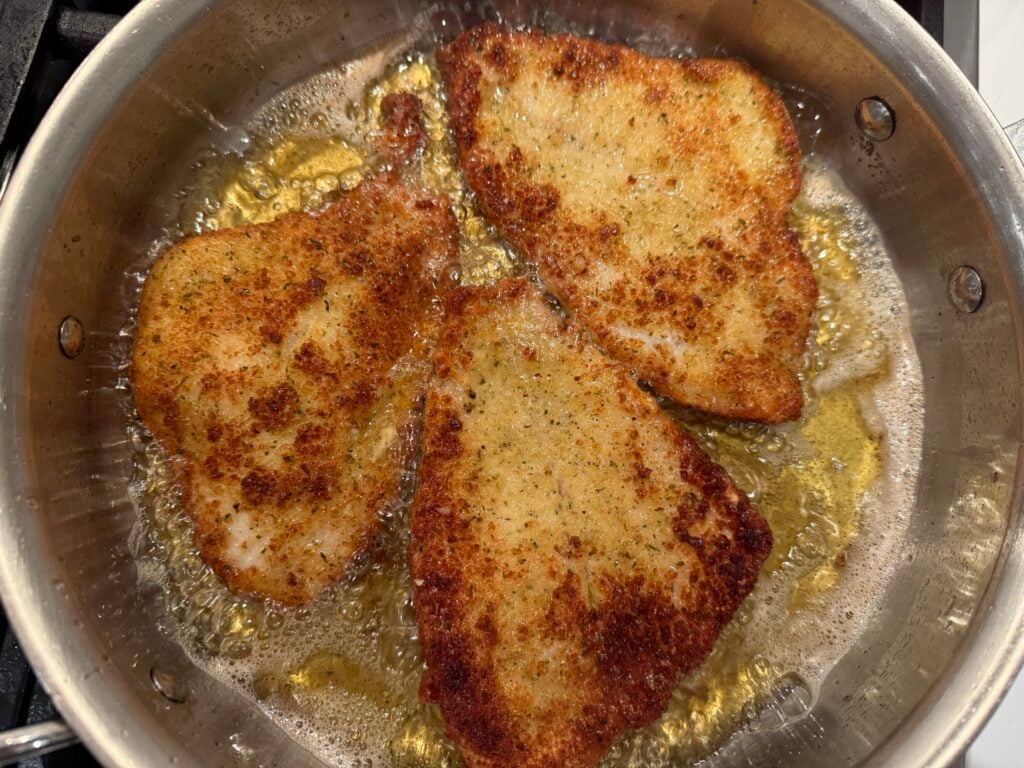
Cook for 2 to 3 minutes per side until golden brown. Flounder is thin, so it cooks fast. The fish is done when the crust is deeply golden and the flesh flakes easily with a fork.
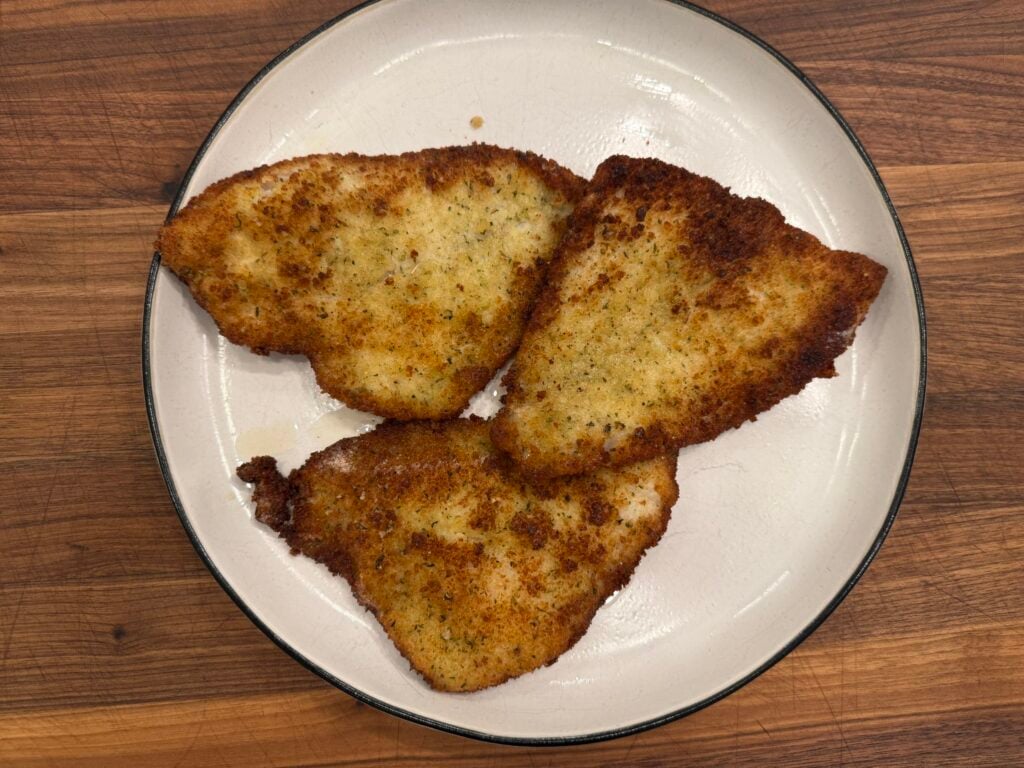
Use a slotted spoon or fish spatula to transfer the cooked fillets to a plate lined with paper towels. The paper absorbs any excess oil so your fish stays crispy instead of sitting in grease.
Tips for the Best Results
Keep your oil temperature steady. If it drops too low, the fish absorbs oil and turns greasy. If it gets too hot, the outside burns before the inside cooks through. Adjust your heat as needed between batches.
Flounder is delicate, so handle it carefully. Use a thin spatula when flipping to avoid breaking the fillets. If a piece does break, it still tastes great even if it’s not picture perfect.
You can keep finished fillets warm in a 200 degree oven while you fry the remaining batches. Place them on a wire rack set over a baking sheet so air circulates and the bottoms stay crispy.
Easy Homemade Tartar Sauce
Tartar sauce takes about two minutes to make and tastes way better than jarred versions. Mix together 1/2 cup mayonnaise, 2 tablespoons sweet pickle relish, 1 teaspoon lemon juice, and a pinch of salt. That’s it. Some people add a touch of dill or capers, but the classic version keeps things simple. Make it ahead and let it chill in the fridge while you cook.
What to Serve with Fried Flounder
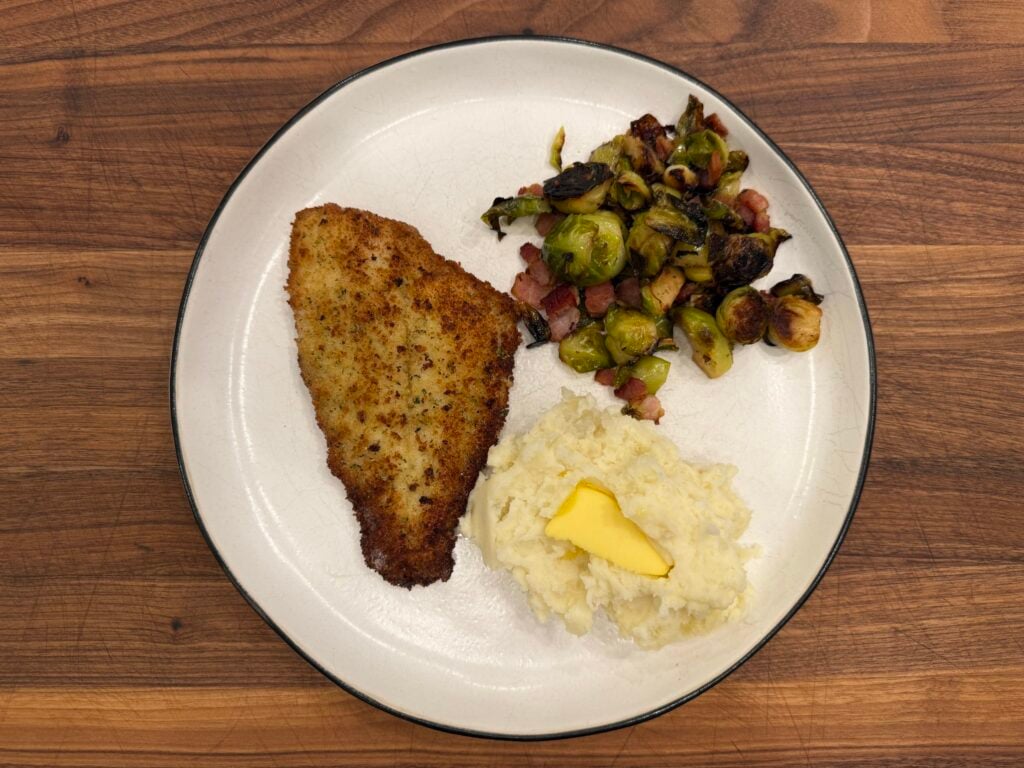
Fried flounder pairs well with just about any classic seafood sides. Coleslaw adds crunch and a cool contrast to the hot fish. French fries or seasoned potato wedges make it a proper fish and chips situation. A simple green salad keeps things lighter if that’s more your style.
Don’t forget the lemon wedges. A squeeze of fresh lemon right before eating brightens everything up and cuts through the richness of the fried coating.
Substitutions and Variations
No flounder? Sole works identically since it’s basically the same fish with a different name. Tilapia, cod, or catfish also work well with this breading method, though cooking times may vary slightly for thicker fillets.
For extra crunch, use plain panko and add your own seasoning blend. Try garlic powder, onion powder, paprika, dried oregano, and dried basil. This gives you control over the flavor profile.
Want to add some parmesan to the bread crumbs? Go for it. A couple tablespoons of grated romano or parmesan adds a savory depth that works really well with the fish.
Storing and Reheating
Fried flounder is best eaten fresh, but leftovers keep in the fridge for up to two days. Store them in a single layer in an airtight container to prevent the coating from getting too soggy.
Reheat in a 400 degree oven for about 8 to 10 minutes to restore some crispiness. The microwave works in a pinch but turns the crust soft. An air fryer at 375 degrees for 4 to 5 minutes also brings back that crunch nicely.
FAQs
Can I use frozen flounder? Yes, just thaw it completely in the refrigerator first and pat it very dry before breading. Excess moisture from frozen fish is the main cause of breading that falls off.
What oil is best for frying? avocado oil or coconut oil work great due to their high smoke point. Peanut oil is another solid choice if no one eating has allergies. Avoid olive oil since it smokes at frying temperatures.
Why did my breading fall off? Usually this happens when the fish wasn’t dry enough before breading or when you skipped the flour step. The flour creates a surface for the egg to stick to, and the egg gives the bread crumbs something to grab.
Can I bake this instead of frying? You can bake breaded flounder at 425 degrees for about 12 to 15 minutes. Spray the top with cooking spray before baking to help it brown. It won’t be quite as crispy as fried, but it’s a lighter option.
More Seafood Recipes to Try
If you enjoyed this fried flounder, you might also like crispy fried shrimp with the same three-step breading method. Baked stuffed flounder makes a great option when you want something fancier. Pan-seared cod with lemon butter sauce keeps things simple but elegant. Fried calamari uses a similar technique and makes an excellent appetizer.


Add comment