

I have been running a trout lure challenge on a pond stocked with hundreds of hungry rainbow trout, and so far it has been an eye opener. The premise is simple. Every lure I test starts with five stars, and every cast that does not produce a fish costs one star. Some lures have been absolutely lethal, hooking up on the very first or second cast. Others have made me sweat it out right down to the final star. This time I wanted to give an underdog a shot, so I tied on the CP Swing Spinner and headed back out to the water.
What the CP Swing Spinner Actually Is
If you have spent any time around inline spinners, you have probably heard of the Mepps Aglia, the Panther Martin, and the Rooster Tail. The CP Swing does not get the same name recognition, but it has a quietly devoted following among serious trout anglers, and there is a good reason for that.
The CP Swing is a classic French inline spinner, made in France just like the Mepps that share its design heritage. The one I tested is a size 4 with a gold willow blade engraved with a fish-scale pattern, a body made up of a stack of graduated brass beads on a straight wire shaft, and a treble hook trailing off the back. On the retrieve, the blade spins around the shaft and throws off the flash and vibration that trout home in on, while those brass beads add weight to help it cast and sink while catching even more light in the water.
It is a simple design with an effective profile, and it has been catching trout for a long time without ever getting the marketing push some of the bigger brands enjoy. That is part of what made me curious. Does it actually hold up against the legends, or is it just a budget option that flies under the radar for a reason?
The Rules of the Challenge
I keep the format the same for every lure so the comparison stays fair. Five stars to start. Every cast that comes back without a trout knocks off a star. If a lure can connect early, it keeps a high rating. If it makes me grind through cast after cast, the stars drop fast.
The pond itself is loaded. We are talking hundreds of stocked rainbow trout, fish that are actively feeding and willing to chase. That sounds like easy mode, and in some ways it is, but it also means there is nowhere to hide. If a lure cannot draw a strike in water this full of fish, that tells you something. The conditions take the usual excuses off the table. No dead water, no pressured fish that have seen every lure in the box. Just a stocked pond and a hungry population of trout.
How I Fish It
I start the CP Swing with a basic fan cast pattern to cover water and figure out where the fish were holding. With an inline spinner like this, the retrieve speed matters more than people think. You need to reel just fast enough to keep the blade spinning, but not so fast that the lure rides up out of the strike zone. Reel too slow and the blade stalls and stops turning, which kills the flash and vibration that make the lure work in the first place. I tried to find the sweet spot where the blade kept a steady, consistent spin while the lure stayed down where the trout were holding.
I also played with the cadence. A steady retrieve is the default and it lets the blade do its thing, but I mixed in a few pauses and lifts of the rod tip to change the depth and the speed. Those little changes can trigger a following trout to commit, especially the moment the blade starts spinning again after a brief drop. That is often the moment you are fishing for.
Did It Catch Fish?
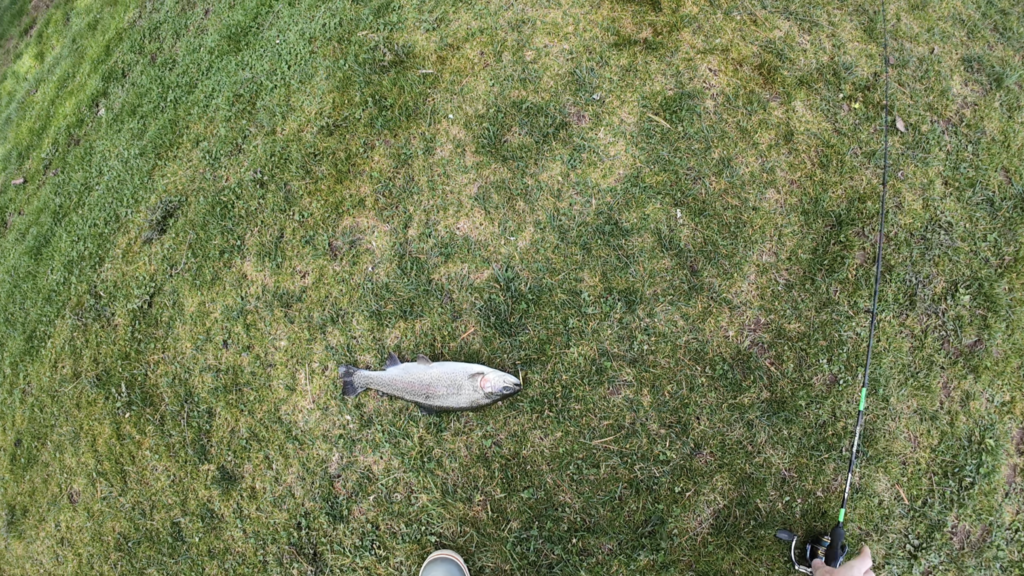
This is the part where I am going to send you to the video, because the whole point of the challenge is watching it play out in real time without me editing out the misses or spoiling the ending. The star rating is the scoreboard, and I want you to see exactly how many stars the CP Swing had left when the test was over.
What I will say is that this lure surprised me. Going in, I had it pegged as a middle of the pack option, the kind of spinner you throw when your confidence baits are not producing. Coming out, I have a different level of respect for what that French willow blade and brass body can do in the water.
My Honest Take on the CP Swing
The CP Swing is never going to win a popularity contest against the Mepps or the Panther Martin, and that is fine. What it offers is a well built, French made spinner with a clean blade action at a price that makes it easy to keep a few in the box. The flash off that fish-scale willow blade is its standout feature, and if you keep it spinning at the right speed and in the right depth, I think you will be pleasantly surprised.
For stocked trout, I would fish it on light line with a slow to moderate retrieve, just fast enough to keep the blade turning. For wild trout in moving water, I would let the current help spin the blade and focus on swinging it through likely holding lies. Either way, it earns a spot in the rotation.
If you want to see how the CP Swing actually performed in the challenge, and find out whether it kept up with the legends or got humbled by a pond full of stocked rainbows, the full video tells the whole story. Watch it, and let me know in the comments which lure you want me to put through the challenge next.
Tight lines.


Add comment